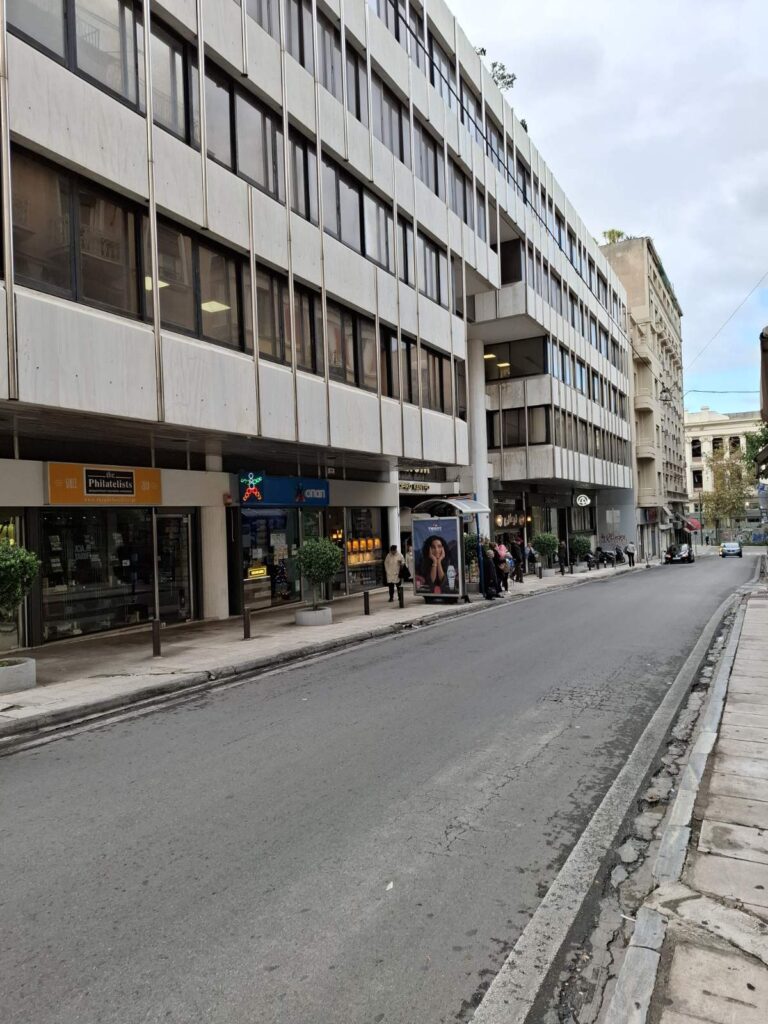


Changes in the Property Market
Construction activity, and more broadly the recovery of the building sector and the property market, is clearly appearing on the horizon. Property sales have increased significantly. Lettings have increased thanks to Airbnb and the golden visa, while it is becoming very clear that the return of land-for-flats development (antiparochi) is just around the corner.
Antiparochi flourished until 2006, and developers gave landowners a large share of the new flats so that they could acquire plots and build on them. Demand was high. Bank loans were granted almost unchecked, and people preferred to take out a loan and buy a flat instead of paying rent. From 2007, however, things began to change. VAT was imposed on newly built properties, and a few years later came ENFIA (the annual property tax), the bailout memoranda and the economic crisis in general. The property market collapsed, property prices plummeted and antiparochi disappeared from the map. Only a few construction companies managed to survive, and only because they had a guaranteed clientele from abroad, mainly Turkish and Israeli buyers.
Today it seems that something is starting to move, mainly thanks to the general change in the economic climate. The three-year suspension of VAT has unblocked many properties, mainly new builds, while antiparochi is slowly returning, with the shares offered to landowners starting to rise.
All construction activity will be helped by the new taxation the government is introducing with its new tax bill. In particular, briefly summarising and listing the new measures the government intends to legislate, we note the following:
- Suspension of VAT for three years. This suspension of VAT will apply to all buildings that have had building permits since 2006 and have remained unsold for one reason or another. Clearly, this measure will free up thousands of properties in which developers were, and still are, trapped, while the number of new building permits issued will also increase
- Freeze on capital gains tax. This is also suspended for three years. It is a tax borne by property sellers, levied on the difference between the purchase price and the sale price of the property. To be fair, this tax has never been applied since it was introduced in 2013, because properties not only failed to gain value but actually slid downwards.
- Tax deduction for property renovation work. 40% of the expenditure relating solely to work on the property will be deducted from tax. In practice, this means we will get a reduction in income tax if we submit receipts from electricians, plumbers, painters and other construction professionals.
- Reduction of ENFIA. The reduction of ENFIA announced by the government will continue in 2020. ENFIA will also be reduced by bringing market values into line with the objective values of properties.
- New objective values. Today, objective values in many parts of the country do not match actual sale prices. Over the last year, actual sale prices in central Athens, in many areas of the Attica basin, in Thessaloniki and in other large cities have risen. This will pull objective values up with them, and they will be rationalised through the adjustment.
- Increase in objective values. Raising objective values in areas where the gap with actual prices was large, or introducing objective values where there were none, such as on islands and in coastal areas, will increase the taxable values of properties, resulting in higher property taxes as well as a higher ENFIA.
- Transfer taxes. All of the above will bring upheaval to property taxation, which is why the government is considering various measures to ease the burden on taxpayers, such as raising the tax-free threshold for parental gifts and inheritances, but above all changing tax rates, which are expected to be reduced across all brackets.